Architecture Rotterdam: top 10 must-sees for architecture lovers
Rotterdam is known worldwide for its bold and innovative approach to architecture. After the Second World War, the city chose not to rebuild what was lost, but to look ahead. That decision shaped a skyline full of experiments, contrasts and new ideas. This list highlights ten places that show why architecture in Rotterdam continues to attract architects, designers and curious visitors from around the world.
1. De Rotterdam
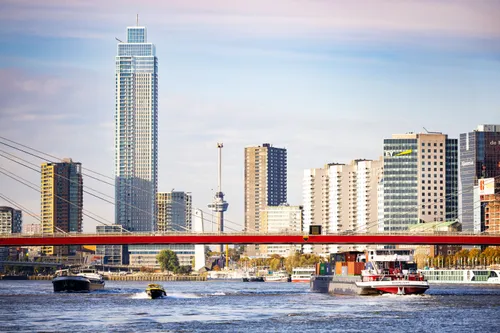
Designed by OMA and Rem Koolhaas, De Rotterdam is often described as a vertical city. Completed in 2013 on the Wilhelminapier, the building combines housing, offices and a hotel in three stacked towers. Its shifting volumes reflect the density and energy of the city. For a great view of the building itself, head to Elvy Gastro Bar in the nhow hotel.

2. De Zalmhaven
Finished in 2022, De Zalmhaven is the tallest residential building in the Netherlands. Designed by Dam & Partners, the tower stands in the Scheepvaartkwartier and is accompanied by lower buildings that soften its presence in the neighbourhood. From restaurant Celest on the 57th floor, you can take in wide views across Rotterdam.
3. Erasmus Bridge
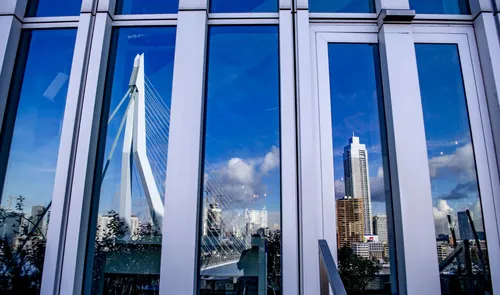
Since 1996, the Erasmus Bridge has connected the city centre with Kop van Zuid. Designed by UNStudio, the bridge is easily recognised by its steel pylon, shaped like a swan’s neck. It is both a vital traffic connection and one of the most photographed icons of Rotterdam.
4. Fenix
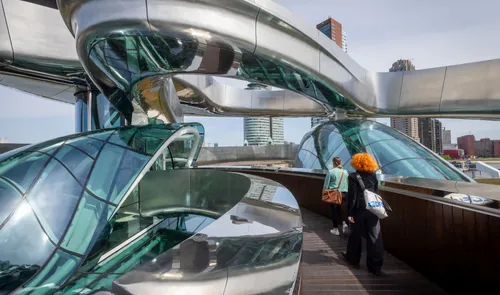
Opened in 2025 on Katendrecht, Fenix is housed in a former harbour warehouse from 1923. The transformation includes the Tornado, a striking double spiral staircase designed by MAD Architects. The building brings together Rotterdam’s harbour past and its cultural present in one bold intervention.
5. Cube Houses (Kubuswoningen)
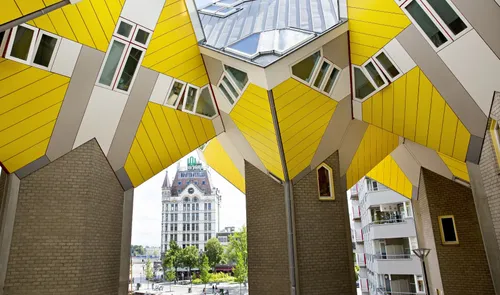
The Cube Houses, designed by Piet Blom and completed in 1984, remain one of Rotterdam’s most playful architectural experiments. The tilted yellow cubes sit above a pedestrian area and challenge traditional ideas of living space. A visit to the Kijk-Kubus offers insight into how these homes are laid out.
6. Kunsthal Rotterdam
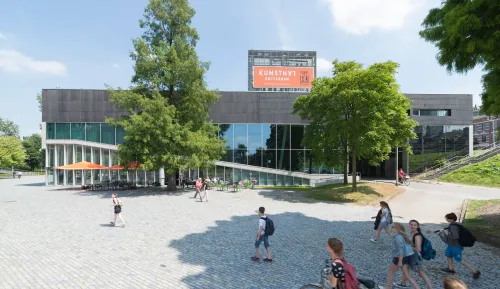
Located in Museumpark, the Kunsthal opened in 1992 and was designed by Rem Koolhaas and OMA. The building is known for its unusual routing and mix of materials, including concrete, glass and steel. There is no fixed visitor route, making the architecture itself part of the experience.
7. Rotterdam Centraal Station
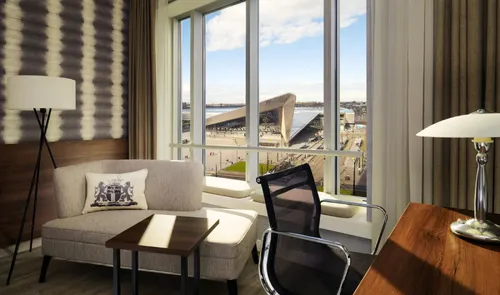
Rotterdam Central Station opened in 2014 and was designed by Team CS. The station combines glass, steel and wood in a sharp, modern design. Its angled roof canopy clearly marks the entrance to the city and reflects Rotterdam’s forward-looking character. Although the 1957 station by Sybold van Ravesteyn is no longer standing, his work can still be seen in the Rivièra Hall and many other listed buildings at Diergaarde Blijdorp.
8. Stadhuis (City Hall)
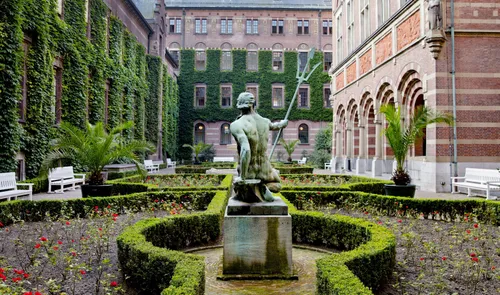
Completed in 1920 and designed by Henri Evers, Rotterdam City Hall is one of the few buildings on the Coolsingel that survived the bombing of 1940. Its richly detailed façade contrasts with the surrounding modern architecture. Inside, a quiet courtyard offers a moment of calm in the city centre.
9. Stadion Feyenoord
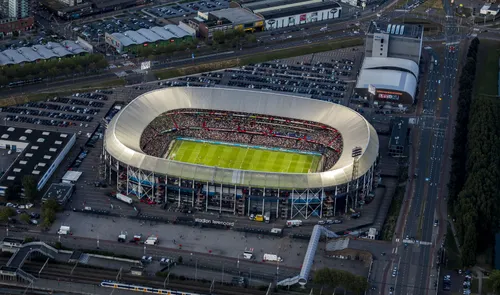
Since 1937, De Kuip has shaped the skyline of Rotterdam-Zuid. Designed by Leendert van der Vlugt of Van der Vlugt & Stam, the stadium is a classic example of the Nieuwe Bouwen movement, with its focus on light, space and a clear, functional structure. The open steel construction and floating stands reflect ideas closely related to Bauhaus functionalism. During a stadium tour, you can visit the players’ tunnel, step onto the pitch and explore the museum, offering a rare behind-the-scenes look at this modernist landmark.
10. Van Nellefabriek
Designed by Brinkman and Van der Vlugt and completed in 1931, the Van Nelle Factory was a landmark of progressive industrial architecture. Its transparent façades, functional floor plans and use of steel and concrete make it a key example of the Nieuwe Bouwen movement. As with Bauhaus design, the focus here is on functionality, transparency and social ideals. In 2014, the complex was awarded UNESCO World Heritage status, a recognition of its global significance. The Van Nelle Factory can be visited on guided tours with UrbanGuides, organised through the Chabot Museum.

Discover more

Rotterdam: City of Architecture
The story of Rotterdam, its history, the bombing, and the reconstruction, reveals the city's fertile ground for bold architecture. When everything is lost, why not rebuild on a grand and impressive scale? The courage displayed in both design and the commissioning of architects is evident throughout Rotterdam.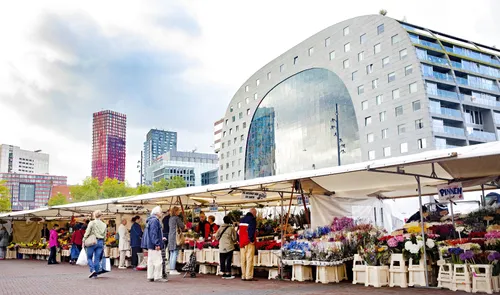
Top 10 Places to Visit in Rotterdam
These are the top 10 places to visit in Rotterdam. The city is a hub of creativity and innovation, offering a wealth of experiences. Discover attractions that highlight the diversity of its architecture and museums, including Depot Boijmans Van Beuningen, the Cube Houses (Kubuswoningen) and the Markthal. Click ‘Add to my list’ and easily find it again later.
Top 10 Attractions in Rotterdam
Discover all the must-see attractions in Rotterdam, from architectural icons to hidden gems. Take to the water with Spido or Splashtours, take in panoramic views at the Euromast or discover rare and endangered species at Diergaarde Blijdorp. Save this top 10 to ‘My List’ and easily find it again later.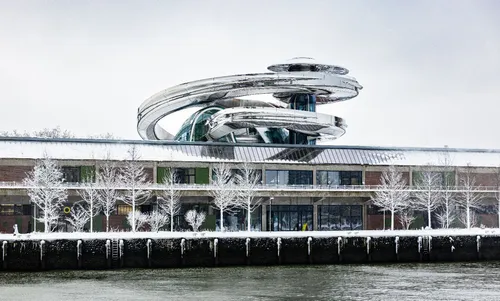
Discover Art in Rotterdam: Top 10 Museums and Art Spaces
In Rotterdam, diversity isn’t just on the streets, it’s reflected in the city’s vibrant mix of museums and cultural spaces. From visual arts and photography to architectural heritage and modern themes, there’s so much to explore. Save this top 10 to ‘My List’ and easily find it again later.