Urban Planning & Development
Rotterdam is an integral part of the Randstad, one of Europe’s most urbanised and economically significant regions. As leading city in urban development, Rotterdam is renowned for its innovative approaches to sustainability, architecture, and infrastructure. Often described as a living laboratory for urban planning, the city has continuously reinvented itself, most notably following its near-total destruction in World War II. Today, Rotterdam stands as a global hub for urban planners, architects, and engineers shaping the cities of the future. If you're looking for a location to organise your conference or business event on urban planning, Rotterdam is a great choice.

Dynamic and forward-thinking sector
Rotterdam’s urban planning and development sector is defined by its commitment to sustainable growth and environmental resilience. This dynamic field encompasses urban design, transportation planning, housing, environmental sustainability, and infrastructure development.
The city has gained international acclaim for its pioneering strategies in climate adaptation, flood protection, and sustainable mobility. Key focus areas include:
Expanding green spaces to enhance liveability and biodiversity.
Transforming industrial zones into vibrant mixed-use neighbourhoods.
Integrating smart city technologies to improve urban efficiency and quality of life.
As an active member of global networks such as the C40 Cities Climate Leadership Group and the Resilient Cities Network, Rotterdam collaborates with cities worldwide to tackle pressing urban challenges, particularly those related to climate change.
Knowledge cluster pushing urban innovation
Rotterdam’s reputation as a centre of excellence in urban planning is bolstered by its world-class educational and research institutions:
Erasmus University Rotterdam: Institute for Housing and Urban Development Studies (IHS): A global leader in urban management and development, offering education, research, and consultancy services to promote sustainable urbanisation. Expertise in urban economics and social sciences, providing critical insights into urban planning challenges.
Delft University of Technology (TU Delft). Located close to Rotterdam, TU Delft is a key regional partner, renowned for its specialisations in architecture, civil engineering, and environmental technology.
Rotterdam Academy of Architecture and Urban Design (Rotterdamse Academie van Bouwkunst). This institution shapes the next generation of urban planners and architects, emphasising innovation and sustainability in its programmes.
Het Nieuwe Instituut. Dedicated to architecture, design, and digital culture, this institute fosters cross-disciplinary collaborations and critical thinking about the role of design in shaping society.
UNESCO-IHE Institute for Water Education. Based in nearby Delft, this is the world’s largest international water education facility, addressing global water challenges through education, research, and capacity building.
Key innovations in Urban Planning
Landscape Architecture: bridging nature and urbanisation
Rotterdam’s urban planning seamlessly integrates nature and built environments. From multifunctional parks to water management projects, the city’s approach to landscape architecture enhances climate resilience while prioritising community well-being. DE URBANISTEN, renowned design firm, exemplifies Rotterdam’s innovative spirit. Their flagship project, Benthemplein water square, combines stormwater storage with social and recreational spaces, setting a global standard for climate-adaptive urban design.Building on water: solution for urban density and climate adaptation
Rotterdam has embraced floating structures as a solution to rising sea levels and urban density. By turning its rivers, harbours, and canals into opportunities for innovation, the city is redefining its relationship with water, creating sustainable and resilient urban spaces. Some of the best known existing floating structures in Rotterdam:
- Floating Pavilion (Previously located in Rijnhaven, now located at Heijplaat)
- Floating Farm
- Havenloft Floating Homes (Nassauhaven)
Policy and planning tool: the Rotterdam Water Atlas
Developed in 2024, the Rotterdam Water Atlas is a cutting-edge tool guiding the city’s water management and climate adaptation strategies. It provides detailed insights into flood-prone areas, water storage, and drainage systems while promoting public engagement. By highlighting opportunities for green space development and enhancing community liveability near waterways, the Water Atlas serves as both a practical resource for urban planners and an accessible guide for residents.
Rotterdam’s leadership in urban planning and development demonstrates how innovation, sustainability, and collaboration can create a thriving, resilient city for the future.
Showcase projects & developments
City Projects
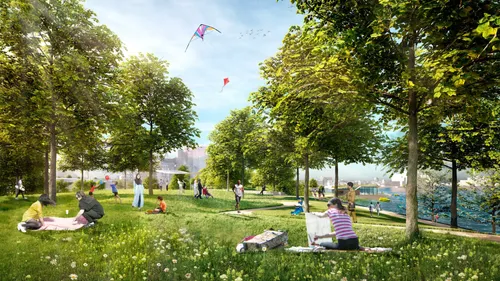
How to make a growing city more resilient, keep it liveable and enjoyable? Rotterdam is giving the city new ‘city lungs’ through a series of City Projects. Image: SWA_Balsley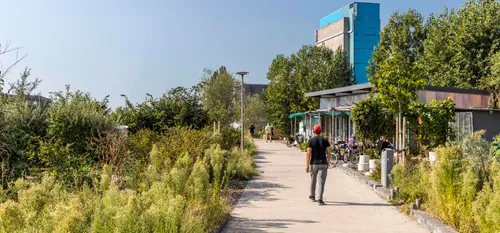
Transformation M4H area
The Municipality of Rotterdam and the Port of Rotterdam Authority are jointly developing the Merwe-Vierhavens (M4H) area into a vibrant area where you can live and work. Photo: Guido Pijper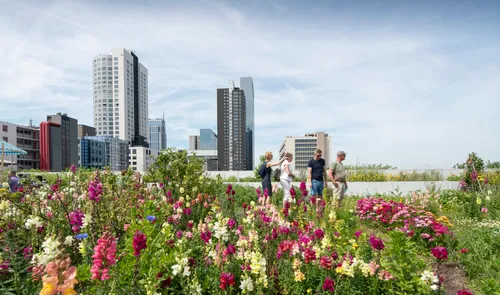
Climate-proof architecture
As cities around the world struggle with the effects of climate change, eyes are focused on Rotterdam and the climate change adaptation projects being developed here. Photo: Frank Hanswijk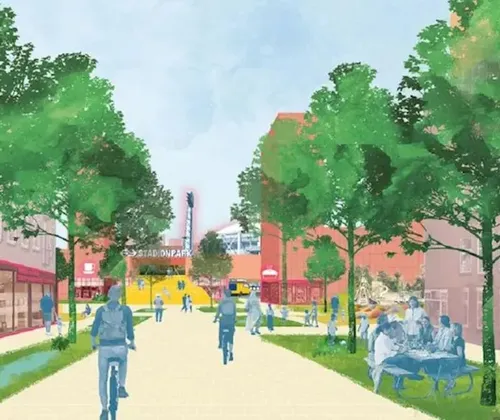
30.000 new homes in Oostflank area
Rotterdam is going to build approximately 30,000 new homes in the Oostflank, the area between Prins Alexander and Zuidplein. Liveability, nature-inclusiveness and infrastructure are central to this development. Image: Studio for New Realities en LOLA Landscape Architects
More Key Sectors
Rotterdam actively fuels collaboration and innovation in many sectors, making it the ideal destination for conferences and events.
- Life sciences & Health
- IT & Technology
- Urban planning & Smart cities
- Maritime & Offshore
- Energy transition & Circular economy
- Agri, Food & Horticulture