How to Register a Business in the Netherlands
Register your business in the Netherlands with a clear step-by-step process, from KvK registration to tax setup.

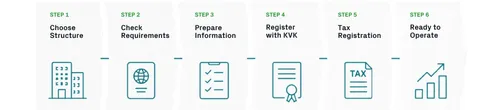
6 Key Steps to Registration
What You'll Need Before Registering
Most businesses will need:
- A chosen business structure
- Valid identification documents
- A registered business address
- Company and ownership information
Depending on your situation, you may also need:
- A residence permit or visa
- A civil-law notary (for certain legal structures)
- Additional licences or permits for regulated activities
Registering a Business in the Netherlands: Step-by-Step
1. Choose a Business Structure
Your chosen legal structure determines how your business is owned, managed and taxed. Common options include a sole proprietorship, partnership or private limited company (BV). Learn more about business structures in the Netherlands.
2. Check Residency and Permit Requirements
Depending on your nationality and business activities, you may need a residence permit, visa or other approvals before establishing your business in the Netherlands. View the checklist for an overview of additional requirements.
3. Prepare Your Business Information
Gather the information required for registration, including identification documents, company details, ownership information and a registered business address.
4. Register Your Business
Businesses are registered through the Dutch Chamber of Commerce (KVK). Some legal structures, such as a BV, also require a civil-law notary.
5. Complete Tax Registration Requirements
Following registration, the Dutch Tax Administration determines which tax obligations apply to your business, including VAT and payroll taxes where relevant.
6. Ready to Operate
Once registration requirements have been completed, you can begin operating your business and focus on establishing your presence in the Netherlands.
How we support international businesses
Rotterdam Partners supports international entrepreneurs and companies looking to establish and grow their business in Rotterdam.
- Business setup and market-entry guidance
- Connections to local partners and service providers
- Support for international growth and expansion
