Business structures in the Netherlands: which one is right for you?
One of the first decisions when starting a business in the Netherlands is choosing the right legal structure. Your choice affects liability, taxes, ownership and future growth opportunities. This page explains the most common business structures and helps you identify which option best suits your situation.

Common business structures in the Netherlands
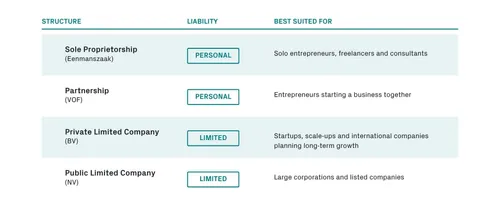
Starting independently or with partners
1. Sole Proprietor or Sole Trader (Dutch: Eenmanszaak): A single individual owns and runs the business. Personal liability for business debts and obligations.
2. General or Commercial Partnership (Dutch: VOF or Vennootschap Onder Firma): Two or more individuals share ownership and responsibilities. Partners are jointly and severally liable for business debts.
3. Professional or Public Partnership (Dutch: Maatschap): Partners (often professionals like doctors or lawyers) share costs and profits. Each partner is liable for their own actions.
4. Limited Partnership (Dutch: CV or Commanditaire Vennootschap): Consists of general partners (with unlimited liability) and limited partners (liable only up to their investment).
Structures for growing businesses and organizations
1. Private Limited Company (Dutch: BV or ‘Besloten Vennootschap met beperkte aansprakelijkheid’): Shareholders’ liability is limited to their investment. Suitable for small to medium-sized enterprises.
2. Public Limited Company (Dutch: NV or Naamloze Vennootschap): Shares can be publicly traded. Suitable for larger businesses and those looking to raise capital through the stock market.
3. Cooperative (Dutch: Coöperatie): Owned and operated by members who use its services. Profits are distributed among members.
4. Association (Dutch: Vereniging): An organization created for a specific purpose, often non-profit. Members are not liable for the association’s debts.
5. Foundation (Dutch: Stichting): Established to achieve a specific goal, usually non-profit. No members, and board members are not personally liable.
Which corporate structure suits your company?
To help you choose, you can use this interactive tool for choosing a Dutch legal structure.
Source: Business.Gov 2024
How we support international businesses
Rotterdam Partners supports international entrepreneurs and companies looking to establish and grow their business in Rotterdam.
- Business setup and market-entry guidance
- Connections to local partners and service providers
- Support for international growth and expansion
