Circular City: Rotterdam Leading the Way
Rotterdam is a leading circular city, driving the transition to a circular economy. As resources become increasingly limited, the shift from a linear “take, use, dispose” model to circular systems is more important than ever. The city is at the forefront of this transition, bringing together businesses, government, innovators and research institutes to develop and implement future-proof circular solutions.
How does circular economy work?
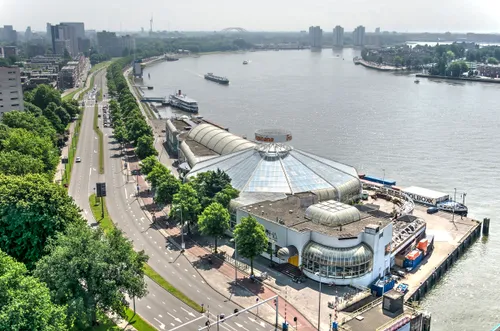
A circular economy is an economic system designed to eliminate waste and keep materials in use for as long as possible. Instead of the traditional “take, make, dispose” model, materials and products are reused, repaired, refurbished and recycled to keep them in use for as long as possible. This approach reduces environmental impact while creating new economic opportunities.
Designing a circular city
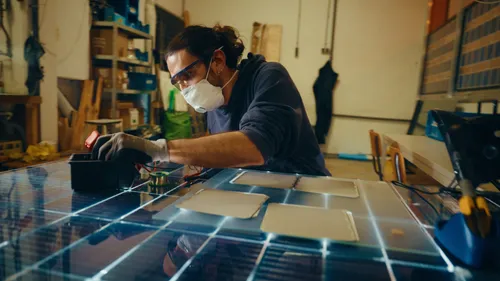
Rotterdam’s vision for a climate‑resilient city places circularity at the heart of urban development. By reusing materials, designing adaptable infrastructure, and integrating green and blue spaces, the city reduces waste, lowers emissions, and keeps resources in use longer. Circular economy principles are applied across architecture, infrastructure and industrial areas, linking material reuse with climate adaptation. Redeveloped industrial zones, green public spaces, and smart urban systems extend lifecycles while enhancing biodiversity and resilience. This city-wide approach aims to embed circularity in daily life by 2030, with a fully circular economy by 2050. The following sections illustrate how circular initiatives take shape across the city and how stakeholders contribute to the transition.
City ambitions accelerated through Rotterdam Circular
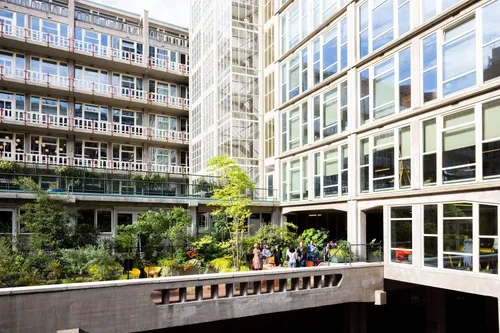
Rotterdam’s circular ambitions are rooted in the municipal programme Rotterdam Circular, which encourages residents, businesses and the municipality to reduce waste and maximise reuse and recycling across the city. Circular initiatives are actively supported through municipal and regional subsidy schemes, and are closely aligned with the EU Circular Action Plan under the Green Deal, as well as the Dutch national programme Netherlands Circular in 2050.
Circular Port
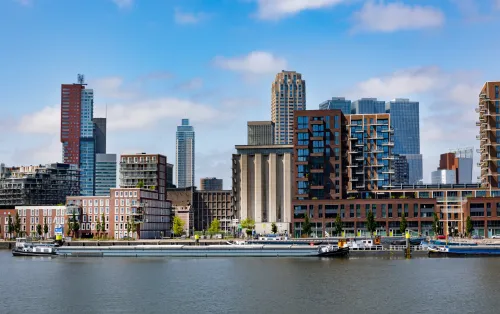
Rotterdam’s port is a driving force behind the city’s circular economy. Through close collaboration with regional partners, it acts as a living testbed for circular innovation, connecting new energy systems, raw materials, transport and industrial processes into future-ready value chains. Port of Rotterdam's strategy towards becoming a fully circular port is based on the following 4 pillars.
Efficiency and Infrastructure
This pillar focuses on optimising existing industrial processes while expanding critical infrastructure for heat, CO₂, electricity and hydrogen. Together, these improvements increase efficiency and enable large-scale energy and resource exchange across the port.New Energy System
At the core of this pillar is the shift away from fossil fuels toward renewable energy sources, particularly green electricity and hydrogen. It supports the transition to a more resilient and future-proof energy system.New Raw Material and Fuel System
This pillar drives the move toward a circular industry by replacing fossil-based inputs with sustainable alternatives such as recycled materials, biomass, CO₂ and green hydrogen. The goal is to create closed-loop value chains across industries.Sustainable Transport
This pillar aims to reduce emissions across transport by accelerating the adoption of cleaner energy sources, including electricity, hydrogen and synthetic fuels. It supports more sustainable movement of goods and materials within and beyond the port.


Circular hubs
Central to Rotterdam's circular transition are circular hubs, the innovation hotspots where waste is reimagined as a resource. These hubs provide space and community to pilot solutions across sectors like construction, food production, chemical recycling, and maritime technology, while linking circularity with the energy transition to keep value in the system and reduce the city’s carbon footprint.

BlueCity
Located in a former swimming pool, BlueCity is the most prominent circular hub where the waste output of one company serves as the raw material for another. It houses over 55 entrepreneurs working on diverse projects, such as fungi-based dyes and ecological insulation, to foster a "blue economy" community.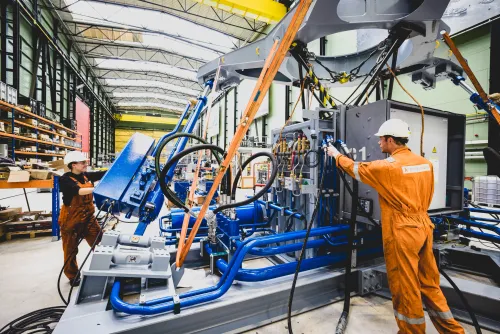
Rotterdam Makers District
Situated in a historic shipyard, RDM Rotterdam is a testing ground for smart port innovations where education and business collaborate on prototypes. The hub focuses on developing emission-free systems, hydrogen technology, and digital solutions to ensure the port becomes CO2 neutral by 2050.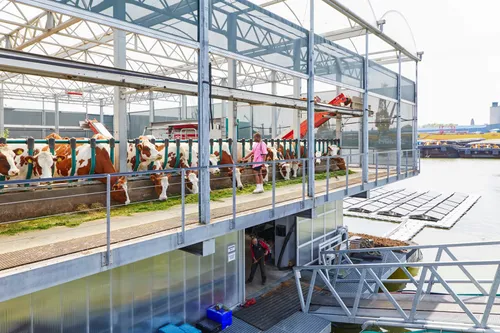
Floating Farm Rotterdam
The Floating Farm is the world’s first offshore dairy farm, demonstrating how cities can produce fresh food locally and transparently. It follows a circular model by feeding its cows residual waste streams from the city, such as beer grains from local breweries and discarded bread from bakeries.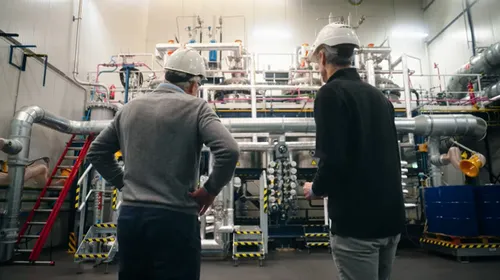
Plant One
Plant One Rotterdam acts as a facilitator for circular innovations, providing a specialized location for companies to test and scale their pilot plants. With its rapid permitting process and technical engineering support, it bridges the gap between the chemical sector and environmental preservation.
Circular hospital
Healthcare generates significant material use and waste, making circularity a key challenge. Erasmus MC, a Rotterdam-based teaching hospital is currently focused on achieving a 100% circular intensive care department by 2030 and a fully circular hospital by 2050. By mapping material flows and working with academic and industry partners, the hospital explores circular alternatives within strict medical and safety requirements. Their efforts are structured around the following key pillars:
Transitioning to Multi-Use Products
Erasmus MC is actively working to replace single-use disposables, such as scissors and protective gear, with sustainable multi-use alternatives to drastically reduce hospital waste. By investing in sterile processing and mapping material flows, hospital aims to implement sustainable alternatives that maintain the highest standards of patient care, without increasing the workload of medical staff.Awareness and Protocol Refinement
Cultural change is fostered through hospital-wide awareness training and the refinement of clinical protocols to prevent the overuse of protective gear. The goal is for every department to live and breathe sustainability, ensuring daily decisions align with the mission for a waste-free future.Total Value Chain and Innovation Procurement
At Erasmus MC, a total value chain approach based on the “10 R’s” of circularity addresses the full lifecycle of products, from design to disposal. By partnering with suppliers through innovation procurement, the hospital promotes recyclable packaging, multi-use alternatives and co-develops circular solutions for complex medical products.Innovation via Green Teams and Living Labs
At Erasmus MC, circularity is driven from the ground up by over 30 employee-led Green Teams and the Sustainable Hospital Living Lab. These platforms enable staff and students to co-create practical, evidence-based solutions, from large-scale plastic recycling to waste-free clinical departments.


Circular architecture
Circular architecture plays a major role in Rotterdam’s urban development. The city is pioneering bio‑based construction, large‑scale material reuse and demountable design, proving how circular building principles can be applied in real, dense urban environments.
SAWA
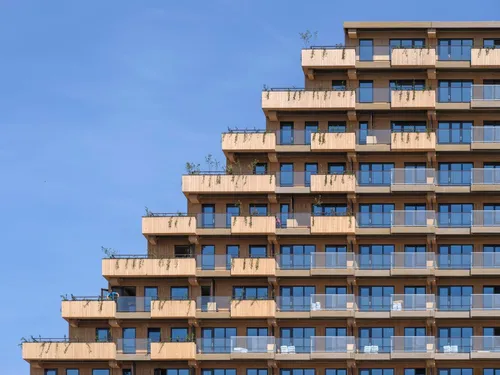
SAWA, deemed the healthiest building in the Netherlands, is a 50-metre-tall residential tower in Rotterdam’s Lloydkwartier, built almost entirely from Cross Laminated Timber (CLT) to store carbon and meet strict climate goals. Designed to be 90% demountable, it allows future reuse of components and features over 600 metres of integrated planters and 140 nesting boxes to enhance urban biodiversity. The residential building was designed by Mei architects and planners, in partnership with NICE Developers and the construction company Era Contour.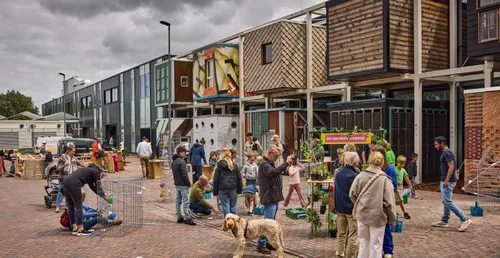
De HER
Functioning as a circular hub and knowledge centre, De HER is a facility where entrepreneurs transform materials collected from the city’s adjacent recycling park into new products. Developed by the construction group BAM, the firm Roelofs, and the Municipality of Rotterdam, the building itself serves as a "second life" showcase, as it was constructed using over 70% reused materials, including salvaged stairs, doors, and ceilings.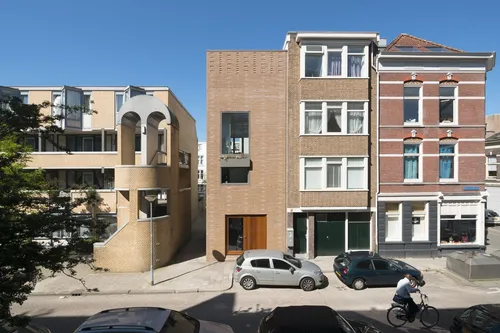
De Gouverneur, House Made of Waste
This residential project, located on Gouvernestraat, features a striking facade built from "WasteBasedBricks" created from upcycled stone, glass, and ceramic waste. Designed and commissioned by Architectuur MAKEN in collaboration with FRONT, the design demonstrates that circular construction can be both high-quality and aesthetic, upcycling over 22,000 kg of waste while blending seamlessly into the historic neighborhood of Rotterdam.
Blade–Made playgrounds
Designed by Rotterdam-based Superuse Studios, these innovative play spaces, such as the Wikado playground in Rotterdam, are created by using decommissioned wind turbine blades to replace virgin resources. This "Blade-Made" strategy reduces carbon emissions by approximately 90% compared to conventional designs and transforms non-recyclable industrial waste into imaginative urban furniture.
Check these inspiring circular stories from Rotterdam
Dive deeper into circular Rotterdam!
Explore the exciting and innovative initiatives and unique opportunities driving Rotterdam’s sustainable future. Discover how businesses and entrepreneurs in our city are leading the way in the circular transition and how you can be a part of this transformative movement.
