Flying on hydrogen from Rotterdam The Hague Airport: almost ready for boarding
New technologies and fuels are being explored worldwide to make flying more sustainable. At Rotterdam The Hague Airport, partners aim to enable Europe’s first hydrogen-powered passenger flights, with Rotterdam The Hague Innovation Airport playing a key role.

Rotterdam The Hague Airport (RTHA) is the regional airport for the Rotterdam and The Hague area. RTHA handles around 2 million passengers annually and connects to 50 European destinations. Besides being an important European hub, Rotterdam The Hague Airport is also a testing ground where plenty of work is being done on the aviation of the future. RTHA is an international test site for sustainable innovations in hydrogen and battery-electric aviation and is part of the Royal Schiphol Group.
 (c) Rotterdam The Hague Airport
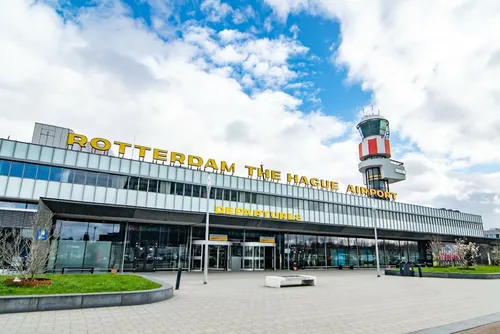 (c) Rotterdam The Hague Airport
Innovation and collaboration for cleaner, sustainable aviation
Rotterdam The Hague Innovation Airport (RHIA) plays a crucial role in this: a community of companies, research institutes and governments working together towards a cleaner, quieter and sustainable future for aviation. One of RHIA’s programmes, the DutcH2 Aviation Hub, sees parties such as TU Delft, NLR, AeroDelft, Air Products, KLM, ZeroAvia and Conscious Aerospace working together. The development of hydrogen-powered aviation goes beyond new aircraft and associated propulsion technology. Innovation is needed within the entire chain. For example, the production and import of hydrogen, transport to airports, storage at airports and hydrogen refueling. The program serves as a community for organizations active in the hydrogen value chain in aviation and as a springboard for the formation of projects in this area, with the aim of researching, testing and demonstrating the entire process – from production to operation. Within the DutcH2 Aviation Hub, several hydrogen-related projects are already taking place at Rotterdam The Hague Airport. The European TULIPS project, for example, will soon carry out the first hydrogen tests at the airport. The focus will be on delivering, storing and refueling liquid hydrogen. And the European GOLIAT project will showcase liquid hydrogen refueling technology and taxi tests with the hydrogen-powered HY4 aircraft from H2FLY.
Commercial European hydrogen-powered flights
Various partners and companies in the RHIA community are working towards the first hydrogen-powered flights from Rotterdam. This not only involves flying on hydrogen but also all of the associated procedures and facilities at the airport, including the necessary infrastructure for storage and distribution. They are developing a total concept for the hydrogen value chain. In the first phase, hydrogen-powered flights will be deployed to regional European destinations. Rotterdam The Hague Airport collaborates with ZeroAvia and Hamburg Airport in setting up demonstration flights between the airports in 2025.
Wilma van Dijk, CEO of Rotterdam The Hague Airport, addressed these plans in an earlier press release: "Hydrogen is a potentially sustainable alternative to flying on kerosene. This collaboration will help us demonstrate and validate our airport’s hydrogen infrastructure and the associated procedures. This will accelerate the transition towards zero-emission aviation. Various partners and companies in the RHIA community are working towards the first hydrogen-powered flights from Rotterdam."
 (c) Samantha-Bosdijk-Photography
The total concept for hydrogen flights
The collaboration on hydrogen flying comprises four main components, explains Daan van Dijk, Program Manager DutcH2 Aviation Hub. "We, of course, need to develop aircraft that can fly on hydrogen. Airbus is working on its Airbus ZEROe concept aircraft and startups such as ZeroAvia, H2FLY and Conscious Aerospace are working on retrofitting existing aircraft. Organizations such as AeroDelft, NLR and TU Delft are doing the same, but then for research related projects. Then there is the additional need for infrastructure. Hydrogen infrastructure at the airport is required to facilitate hydrogen-powered aircraft. This type of infrastructure must meet the highest safety requirements and is fairly new to airports compared to current kerosene dominated infrastructure. This includes for instance hydrogen storage facilities and (mobile) refuelers. The third component is the hydrogen molecule itself. There must be plenty of green hydrogen available and eventually in liquified form (which means that the hydrogen needs to be cooled to a temperature of -252,8 °C). Local production of hydrogen is a must, but the import of green hydrogen (carriers) is also necessary and even necessary given the green energy abundancy of countries such as Morocco, Spain and South Africa. The Rotterdam region, including the Port of Rotterdam, is putting a lot of effort into this. RTHA has joined this movement and is a link in the regional hydrogen chain. And lastly, the fourth component is the hydrogen infrastructure on the destination side. Investing in a green corridor, a route between airports, with fellow European airports is essential. We are already working with other European airports on European projects and within our DutcH2 Aviation Hub program, and more collaborations with European aviation hydrogen clusters can be expected."




Get in touch
Rotterdam Partners is your entry point for business, congress and event opportunities in Rotterdam’s energy industry. Our experts are here to connect you to relevant networks and partners and help you find your feet in our urban region. Please contact us: